Nutrition in Ivory Coast: CONANUT mobilizes crowned heads to boost breastfeeding

Author: Jean Kelly KOUASSIPublished on: July 7, 2026Country: Ivory Coast
HealthSociety & Lifestyle
Nutrition in Ivory Coast: CONANUT mobilizes crowned heads to boost breastfeeding
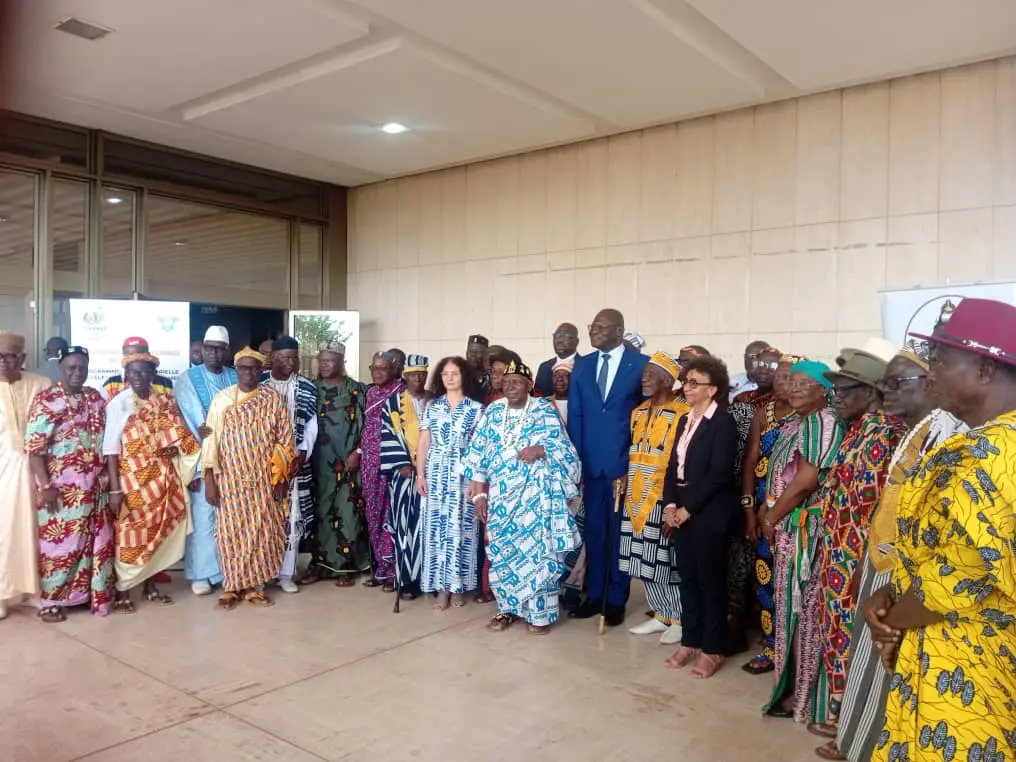
On July 2, 2026, the National Council for Food and Nutrition (CONANUT) held a strategic advocacy session at the Félix Houphouët-Boigny Foundation, aiming to make traditional kings and chiefs key relays for the national breastfeeding policy. Dr. N'goran Yobouet Patricia reported that chronic malnutrition dropped from 34% to 21% and acute malnutrition from 7% to under 5%, but exclusive breastfeeding remains low (97% of women breastfeed, but very few exclusively). The target is to reach 50% exclusive breastfeeding by 2027-2028 and 80% by 2030. Emmanuel Ahoutou Koffi emphasized the importance of human capital and the role of traditional chiefs as resident authorities to embed policies at the local level.

Read original article

linfodrome.com

Stay informed with NewsBoulevard

Get the latest news summaries delivered to your inbox

Related News

150 health workers trained to roll out new treatment for sleeping sickness in Kwilu and Mai-Ndombe
HealthDemocratic Republic of the Congo
Jean-Claude Ntangamu•

150 health workers trained to roll out new treatment for sleeping sickness in Kwilu and Mai-Ndombe

One hundred and fifty health workers from Kwilu and Mai-Ndombe completed three days of training on Acoziborole, a new treatment for human African trypanosomiasis, or sleeping sickness. The session was organized by the Bandundu-Nord provincial coordination team for the fight against sleeping sickness, with support from DNDi, and took place in Bandundu, Bagata and Mushie, bringing together staff from 50 health facilities. Participants learned how to screen for and diagnose the disease, identify eligible patients, administer the treatment and monitor possible adverse effects. The programme also includes supervision at 32 health facilities and strengthened pharmacovigilance.

Read More
Human Capital: Why Africa Is Falling Behind and How to Get Back on Track
Business & EconomyHealthNigeria
Tognissè Dahandé•

Human Capital: Why Africa Is Falling Behind and How to Get Back on Track

A World Bank report led by Alaka Holla, Norbert Schady and Joana Silva estimates that human capital accounts for about two-thirds of the per-capita income gap between rich and poor countries. Over 15 years, health, learning or workplace training declined in two-thirds of low- and middle-income countries; in sub-Saharan Africa, school results fell, and adults born in 1996 are on average three centimeters shorter than those born in 1966. The report urges governments to focus on homes, neighborhoods and workplaces, stressing early childhood stimulation, books at home and girls’ education. In northern Nigeria, a program combining cash and asset transfers with health advice for mothers reduced stunting by six percentage points two years after it ended.

Read More
Can AI spot breast cancer earlier? NHS launches world's largest trial to find out
HealthTechnologyUnited Kingdom
Fergus Walsh•

Can AI spot breast cancer earlier? NHS launches world's largest trial to find out

Nearly 700,000 women across the UK will be invited to join the EDITH trial, which will test whether artificial intelligence can improve breast cancer screening without causing unnecessary recalls or overdiagnosis. Launched at Cambridge University Hospitals, the trial will expand to 30 sites and replace one of the two specialists who usually read each mammogram with AI. Co-investigator Sian Taylor-Phillips says researchers must avoid overdiagnosing mild disease, while Fiona Gilbert says the technology could help address a major shortage of radiologists. Shirley Essex, 70, says routine screening detected her cancer at an early stage; she had surgery and radiotherapy but did not need chemotherapy.

Read More

Stay Updated with NewsBoulevard

Subscribe to our newsletter for the latest news summaries delivered to your inbox