Why food prices remain high despite government interventions and the ongoing harvest

Author: Cynthia AloPublished on: October 23, 2026Country: Nigeria
Business & Economy
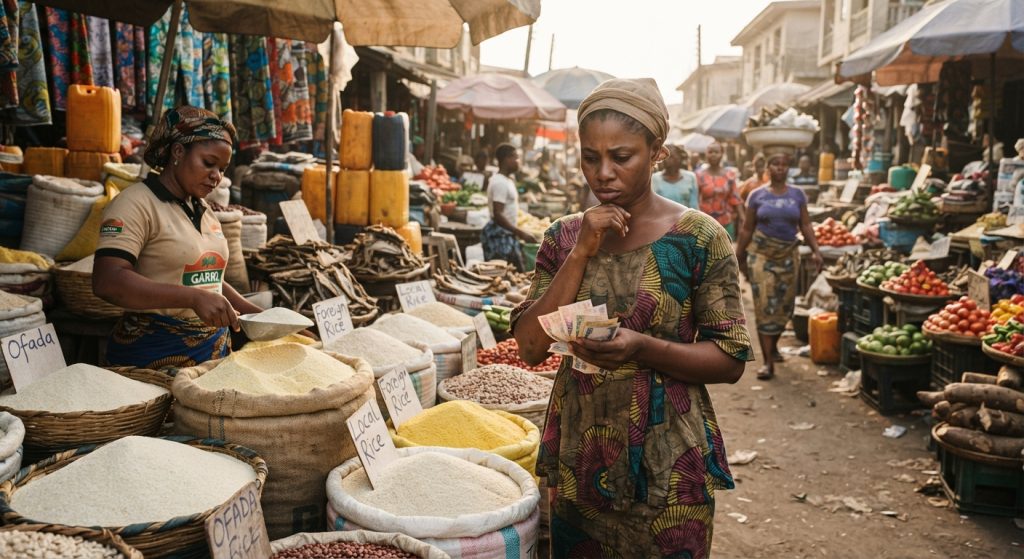
Why food prices remain high despite government interventions and the ongoing harvest

Food prices in Nigeria remain high despite the ongoing harvest and federal measures to support farmers, including the distribution of farm inputs and fertiliser. Farmers, traders and consumers point to transport costs, delayed input deliveries, inadequate storage and insecurity in some farming areas. Annual food inflation was 19.59% in September 2026, up slightly from 19.57% in August, while the food index fell 1.55% month on month. Lagos recorded the highest annual food inflation at 34.40%, followed by Imo at 33.79% and Ondo at 31.49%.

Stay informed with NewsBoulevard

Get the latest news summaries delivered to your inbox

Related News

Agricultural sectors: How Abidjan wants to make the informal economy the engine of agribusiness
Business & EconomyCôte d’Ivoire
DJOMANDE Aziz•

Agricultural sectors: How Abidjan wants to make the informal economy the engine of agribusiness

In Côte d’Ivoire, 91.6% of agricultural jobs were informal in 2021, while the food-processing industry accounted for an average of 5.9% of GDP between 2021 and 2024. Agriculture Minister Bruno Nabagné Koné describes producers, collectors, transporters, processors and traders as essential infrastructure for agribusiness. Local processing is growing: 42% of cocoa is ground domestically and 42.6% of cashew nuts are processed, generating nearly 20,000 direct jobs. The government wants to support gradual formalization and better traceability without excluding small producers, while expanding processing SMEs and higher-value finished products.

Read More

Stay Updated with NewsBoulevard

Subscribe to our newsletter for the latest news summaries delivered to your inbox